
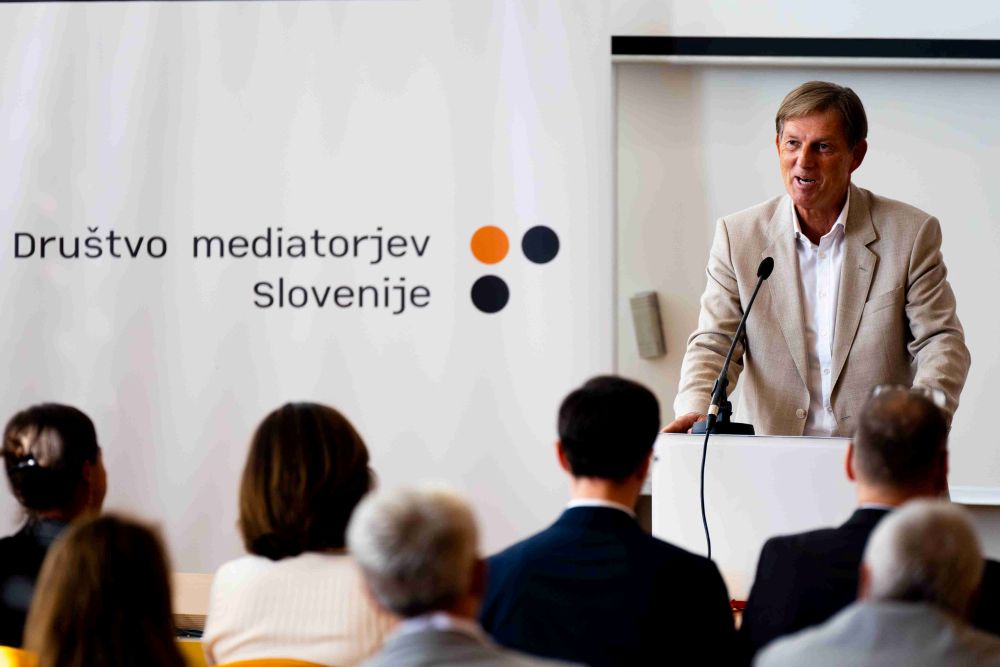
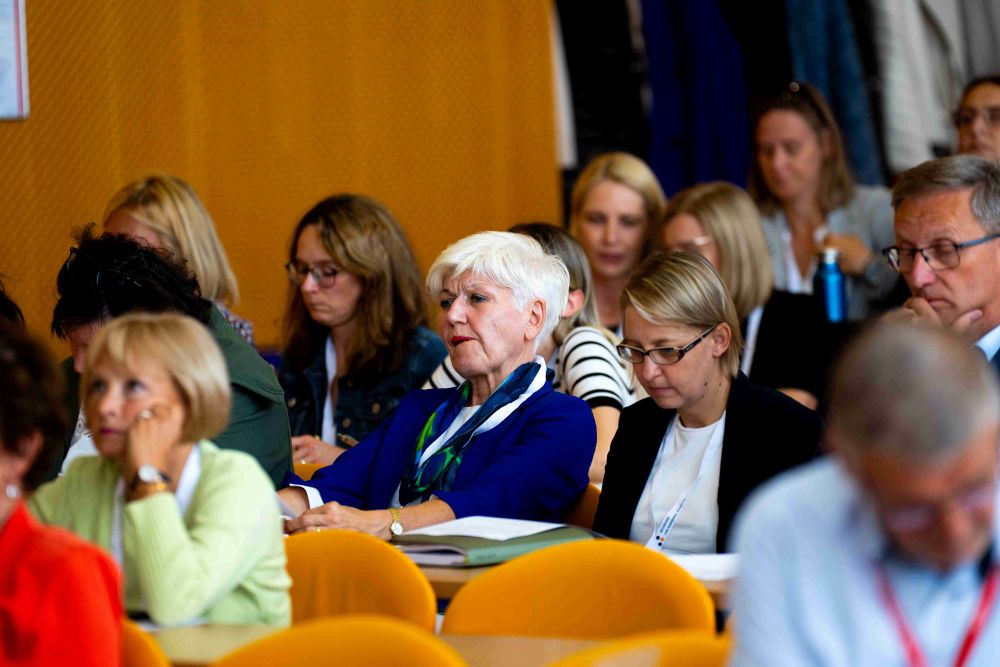
On 29 and 30 September 2026, the Slovenian Association of Mediators marked its twentieth anniversary with a two-day conference at the Faculty of Law, University of Ljubljana, entitled “Mediation as a Response to Contemporary Challenges: From an Alternative to an Essential Social Competence.” The conference brought together around 170 participants from the judiciary, academia, mediation, healthcare, business and other professional fields.
The conference provided an opportunity to reflect on the development of mediation in Slovenia, but above all to consider its future. Throughout the two-day programme, mediation was therefore approached as something much broader than a formal process for resolving individual disputes. The contributions explored the nature of conflict, the role of law, dialogue and democratic institutions, the importance of emotions and identity, power relations, and the question of whether the knowledge and principles used in mediation can also be understood as a broader social competence.
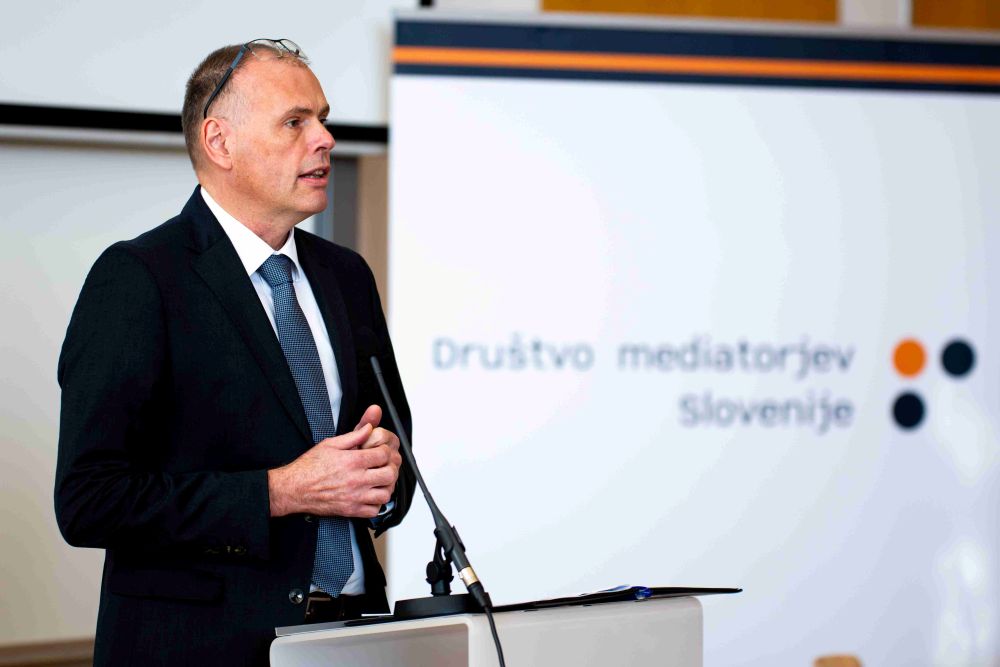
The participants were first addressed by Aleksander Jakobčič, President of the Slovenian Association of Mediators, who placed peaceful dispute resolution within a broader historical and social context. Conflicts are an inevitable part of human relationships: people have different interests, needs, values and ideas of what is just. The essential question is therefore not whether conflicts will exist, but how we will be able to deal with them.
He emphasised that humanity has progressed not only through technological, scientific and other achievements, but also through our ability to connect, cooperate and overcome differences. Human history is certainly a history of numerous conflicts, but it is also a history of developing rules, institutions and forms of cooperation that have enabled people with different interests and views to live together. Mediation can also be understood as part of this development.
The Slovenian Association of Mediators was established on 5 September 2006 at the Faculty of Law, University of Ljubljana. Over the past two decades, it has brought together mediators from different fields, developed training programmes and professional standards, organised professional meetings and conferences, contributed to professional literature, and promoted a culture of peaceful dispute resolution. The twentieth anniversary was therefore not merely an opportunity to look back, but above all to ask what mediation can offer society today and in the future.
The Dean of the Faculty of Law, University of Ljubljana, Prof. Dr Miro Cerar, continued this line of thought by describing mediation as a “civilisational achievement and value” and linking it to the rule of law and a culture of dialogue. Independent and impartial courts are an expression of the rule of law, in which the argument of force is replaced by the force of argument. Mediation, in turn, creates a space in which parties to a dispute can, with the assistance of a mediator, seek a peaceful and consensual solution themselves.
Practical reasons for choosing mediation, such as time, costs and the uncertainty of court proceedings, are important, but, as Cerar stressed, they do not exhaust its significance. A higher level of relational culture is also reflected in a genuine willingness to engage in dialogue, listen to others, seek compromise and, where necessary, repair injustice. In his view, both Slovenia and the wider world therefore need a stronger culture of mediation.
The participants were also addressed by Minister of Justice Mihael Zupančič, who presented mediation not only as a method of resolving individual disputes, but also as an important building block of a more connected, secure and tolerant society, particularly at a time of increasing polarisation and diminishing willingness to engage in dialogue. He stressed that conflict is not necessarily destructive in itself; it becomes destructive when we lose the tools to manage it constructively.
Among the advantages of mediation, he highlighted the active role of the parties in shaping the solution, its speed, cost-effectiveness and confidentiality, as well as its potential to preserve relationships. On the occasion of the Association’s twentieth anniversary, he thanked all those who had contributed to the development of peaceful dispute resolution and particularly acknowledged the work of mediators, who “bring calm where uncertainty prevails and restore dignity and human connection where relationships and dialogue have broken down.”
Mediation and Society: Can We Learn to Live with Conflict?
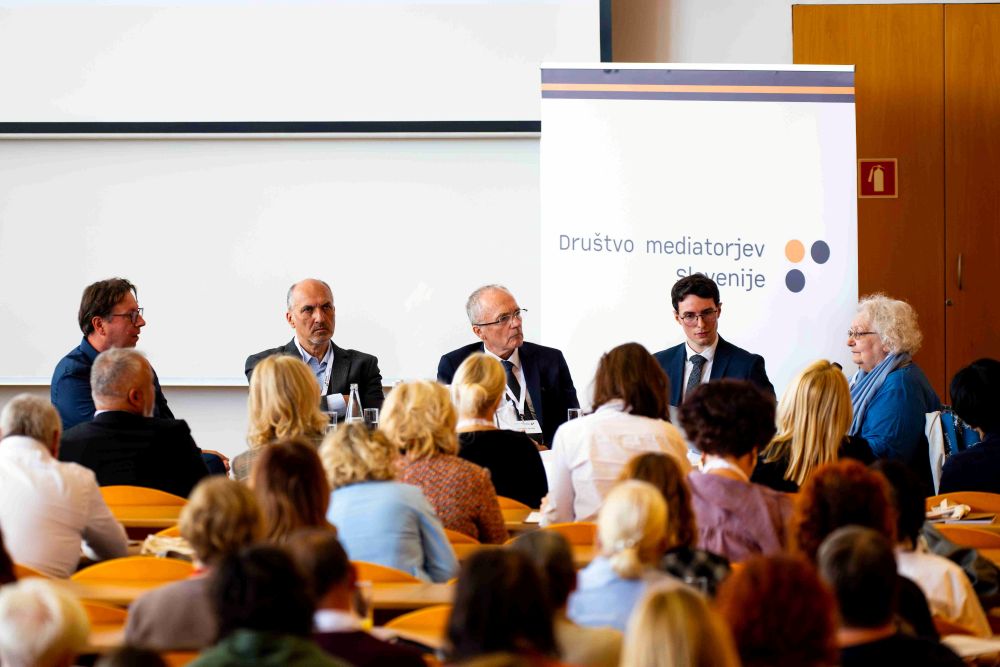
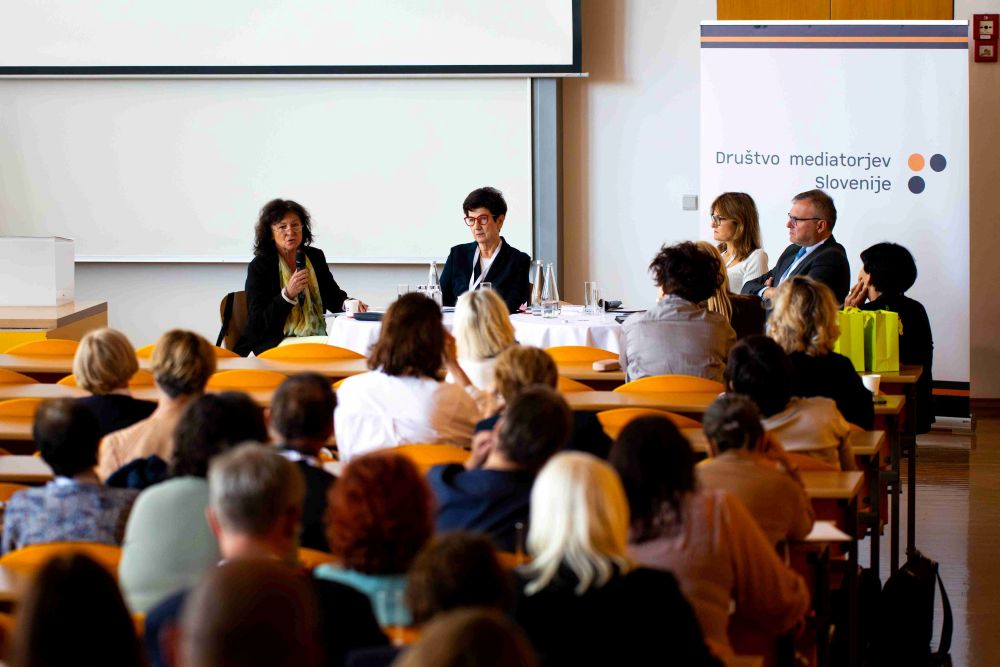
The central professional part of the first day continued with the round table “Mediation and Society: Peaceful Conflict Management as a Foundation of a Culture of Dialogue and Contemporary Society,” moderated by Aleksander Jakobčič. The discussion brought together Prof. Dr Svetlana Slapšak, Dr Janez Markeš, Assoc. Prof. Dr Boris Vezjak and Assoc. Prof. Dr Jernej Završnik.
The starting point was a broader understanding of mediation: not merely as a formal process in which a third party assists participants in resolving a specific dispute, but also as a possible way of thinking about conflict, dialogue and coexistence. Can the abilities developed in the mediation room for example listening, examining our own assumptions, understanding different perspectives, distinguishing positions from interests, and remaining in dialogue despite disagreement, also be transferred to society at large?
The discussion did not proceed from an idealised understanding of dialogue. Not every conflict is suitable for mediation, not every relationship is equal, and not every disagreement can or should end in compromise. Law, institutions and accountability therefore remain indispensable. The question of what dialogue can achieve, and where its limits lie, connected the perspectives of all four participants.
Prof. Dr Svetlana Slapšak placed mediation in the context of the ancient world and used Homer’s Odysseus to demonstrate that mediation between different people, interests and worlds is far older than contemporary institutionalised mediation. Odysseus repeatedly finds himself mediating between leaders and soldiers, between Agamemnon and Achilles, between humans and deities, between different cultures, between the living and the dead, and between different identities. Yet Odysseus is not a neutral mediator in the modern sense. He is an interested participant, negotiator, rhetorician and strategist, and precisely for this reason his character raises questions about the relationship between mediation and power.
His Homeric epithet polytropos points to his ability to adapt to different circumstances and interlocutors. Particularly relevant to mediation is the idea that a mediator must understand more than one “language”, even when everyone is technically speaking the same language. The same words for example justice, honour, recognition, responsibility or harm, may carry very different meanings for different people. Mediation therefore begins not by eliminating differences, but by recognising and understanding them.
Odysseus’ mêtis, his practical and adaptive intelligence, raises an even more difficult question: where does skilful mediation end and manipulation begin? A mediator possesses procedural power and the ability to influence communication, which makes the manner in which that power is exercised particularly important.
Through Homeric narratives, Slapšak also explored the relationship between order and justice. The return of Chryseis, for example, shows that material compensation alone may not be sufficient to resolve a conflict. Harm may require recognition and symbolic reparation, while a public wrong may also require public acknowledgement. Yet restoring order does not necessarily mean that an unjust distribution of power has changed.
Similarly, the story of Thersites warns that order can also be restored by silencing a weaker voice. Mediation that fails to recognise power imbalances may therefore inadvertently become an instrument of existing authority. The failed attempt to mediate between Agamemnon and Achilles likewise demonstrates the limits of material compromise: even a substantial offer of compensation may be incapable of repairing humiliation or wounded dignity. A mediator cannot substitute for a moral act that one party expects from another.
The Homeric world therefore offers an important warning for contemporary mediation: peace and agreement are not, in themselves, the only measures of success. We must also ask what kind of peace has been achieved, whose voices have been heard, and whether an agreement merely restores order or also contributes to a more just relationship.
Dr Janez Markeš approached conflict through the perspectives of democracy, political culture, the public sphere and the media. A democratic society is not a society without conflict. On the contrary, it presupposes a plurality of interests, values and views. Its quality is therefore measured not by the absence of disagreement, but also by its capacity to keep conflict within the sphere of legitimate political and social contestation.
An important distinction is that between defeating and delegitimising an opponent. In a democracy, one can lose an election, a vote or a public debate without thereby losing one’s legitimate place within the community. The problem arises when the purpose of conflict is no longer to confront an argument or achieve political victory, but to exclude the other as a legitimate interlocutor.
The role of the media is particularly important in this context. The media do not merely describe conflicts. Through the selection of topics, language, emphasis and modes of representation, they participate in shaping the public sphere and, consequently, the conflicts themselves.
This raises the question of how much conflict a democratic society actually needs. The complete absence of conflict is not necessarily a sign of a healthy community; it may also indicate an absence of pluralism or of space for expressing disagreement. The task of democratic culture is therefore not to eliminate conflict, but to preserve the conditions under which disagreement does not turn into hostility and the denial of the other’s legitimacy.
Assoc. Prof. Dr Boris Vezjak connected mediation with Socratic dialogue, whose purpose is not to defeat one’s interlocutor but to be willing to subject one’s own beliefs to questioning and to accept that they may be inconsistent, weak or mistaken.
He highlighted the Socratic elenchos which is the examination of claims, their assumptions and their consequences. A mediator is not tasked with disproving the participants’ positions, but can use questions to enable them to examine and clarify those positions.
Clarification of concepts is particularly important. Two participants may use the same word such as “justice”, “respect” or “responsibility” and believe they are discussing the same thing while attributing entirely different meanings to it. Simply clarifying such differences can significantly alter how a conflict is understood.
Vezjak also discussed aporia, a state in which dialogue does not produce a definitive answer but leads to the realisation that one’s initial claims were not sufficiently robust or that there are things one simply does not yet know.
Such a realisation can itself constitute meaningful progress. If we measure the success of dialogue exclusively by agreement, we may overlook the shift that occurs when a person begins to question their own certainty, better understands the other’s argument, or recognises the possibility of an alternative interpretation. The Socratic perspective therefore also serves as a corrective to the premature pursuit of agreement: compromise in itself does not prove that a solution is rational, just or morally acceptable.
Assoc. Prof. Dr Jernej Završnik, physician and mediator, explored conflict through the experience of healthcare, where illness, uncertainty, professional authority, unequal positions and intense emotions intersect. He particularly emphasised fear of illness, pain, loss, uncertainty or the future. Such emotions can strongly influence the reactions of patients and their relatives, their capacity to absorb information, and the way in which they interpret the actions of healthcare professionals.
Professional expertise alone is therefore not sufficient. Empathy, emotional intelligence and the ability to recognise one’s own emotions and those of others also play an important role.
The same event can be experienced and understood very differently by different people. Our responses are influenced by innate characteristics, upbringing, environment and life experience. Something that appears relatively insignificant to one person may be experienced by another as a profound injury.
Recognising this does not mean accepting every interpretation offered by another person as correct. It means acknowledging that the same event can be viewed from different perspectives and attempting to understand the other person’s perspective before judging it. Conflict is a normal part of life. The essential question is therefore not whether we will experience conflicts, but how we will deal with them.
Conclusions of the Round Table
Throughout the discussion, the participants’ different perspectives gradually converged around a broader question raised by moderator Aleksander Jakobčič: what is required for people with different interests, values, experiences and views to remain in relationship with one another and within a shared social space? The discussion thus moved beyond mediation itself towards the more fundamental challenge of constructive conflict management in contemporary society.
It became clear that conflict should not be understood merely as a deviation from a normal state that must be eliminated as quickly as possible. Conflict may arise from legitimate differences and is therefore an inherent part of relationships and pluralistic societies. The crucial question is what happens to difference during the course of conflict: does it remain the subject of argument and negotiation, or does the other party gradually cease to be recognised as a legitimate interlocutor?
This is where the otherwise diverse strands of the discussion intersected. Power influences who is able to speak and who is heard; language shapes how we understand our own position and that of others; emotions and past experiences affect how we experience the same event; and critical dialogue requires a willingness to examine our own understanding of the conflict. Constructive dialogue is therefore more than an exchange of arguments. It requires a capacity to live with uncertainty and difference without needing to devalue or exclude the other.
Another important conclusion was the distinction between reaching an agreement and the quality of the process itself. Agreement may be an important objective of mediation, but it does not in itself reveal whether power imbalances have been addressed, whether weaker voices have been heard, whether wounded dignity has been recognised, or whether the participants have gained a better understanding of the conflict. At times, meaningful progress may consist simply in becoming less certain of one’s own interpretation, seeing the situation from another perspective, or once again recognising the other as a legitimate interlocutor.
The questions around which the moderator structured the discussion therefore also led to a broader understanding of mediation. Its social value need not lie only in extending mediation procedures to ever more areas of life, but also in transferring some of their core competencies: listening, asking questions, examining assumptions, recognising emotions and power relations, and maintaining dialogue in the face of disagreement.
The moderator linked these observations back to the central premise of the conference: mediation can be more than a method for reaching agreements. The knowledge and skills on which it is based such as active listening, asking questions, examining one’s own assumptions, understanding different perspectives, recognising emotions and power relations, and sustaining dialogue despite disagreement, are also important for relationships, institutions and democratic society more broadly.
The discussion therefore did not lead to the conclusion that every conflict can be resolved through dialogue or mediation. On the contrary, the participants’ different perspectives highlighted the limits of dialogue, unequal power relations and the possibility of unjust compromise. The central conclusion was more demanding: a mature society is not a society without conflict, but one capable of dealing with differences and conflicts without allowing them to destroy the possibility of living together.
In this sense, the round table returned directly to the central theme of the conference. If mediation is also understood as a set of capacities for engaging constructively with difference, its relevance extends far beyond the mediation room. Peaceful conflict management is becoming one of the competencies that a contemporary pluralistic society needs in order to function.
From Exploring Conflict to Negotiation
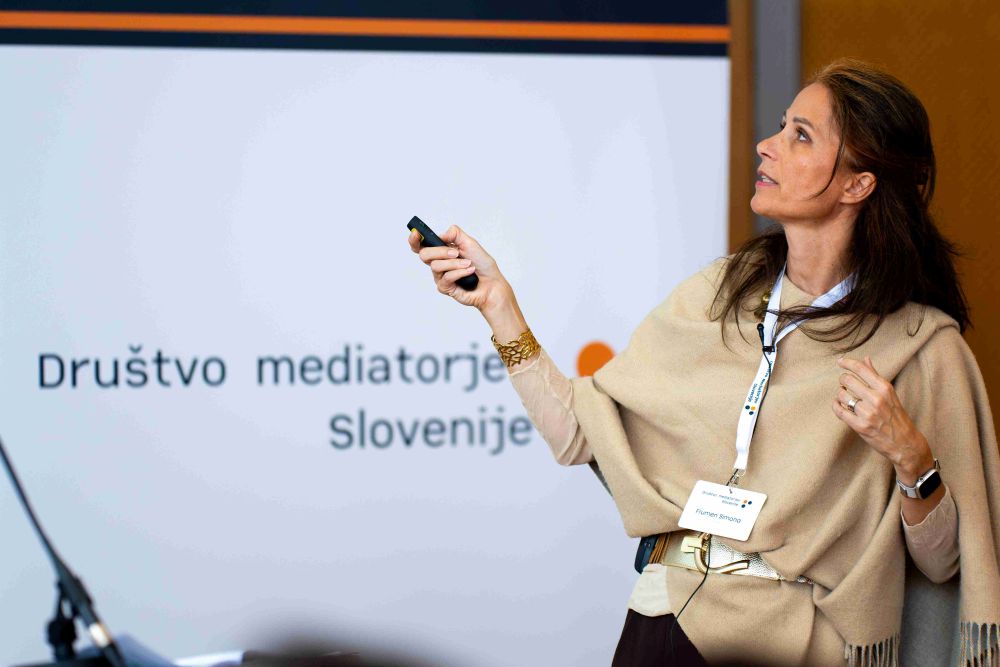
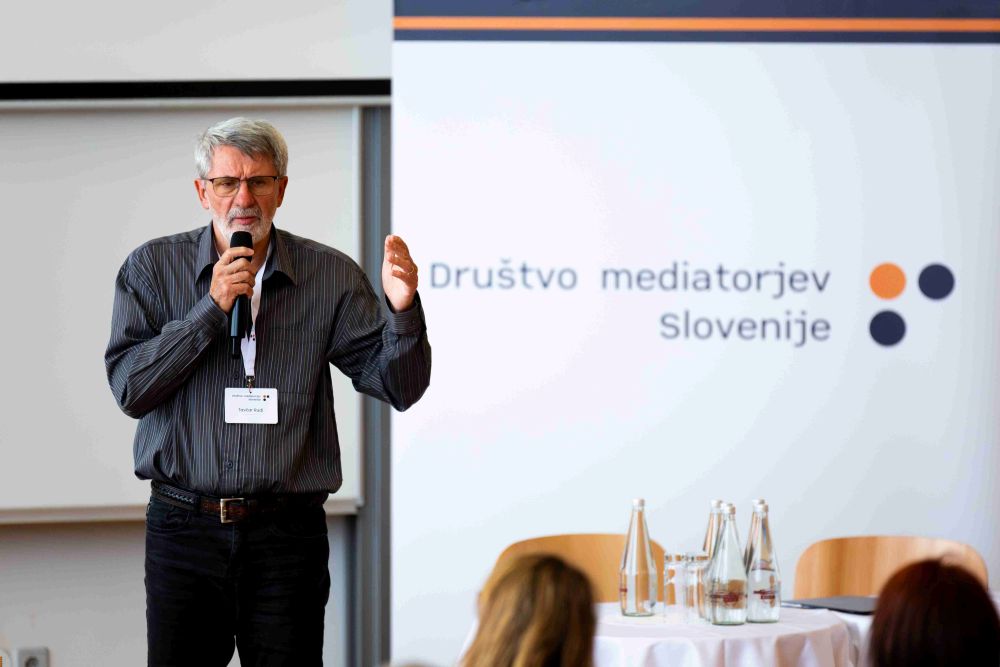
The afternoon programme of the first day continued with a practical workshop, “From Exploration to Negotiation: How to Create a Transition towards Finding Solutions,” led by Simona Frumen and Rudi Tavčar.
The workshop focused on one of the key moments in the mediation process: the transition from exploring the conflict to developing a negotiation agenda, generating options and negotiating. The mediator must connect and structure the information obtained during the exploration phase, distinguish between stated positions and the underlying interests and needs, and identify potential common or compatible interests. This gradually creates a negotiation agenda which is the issues the parties need to address if they are to move towards a solution.
An important mediation skill is also knowing when sufficient exploration has taken place. Mediation cannot remain focused exclusively on analysing what happened in the past. At a certain point, a transition must be made from understanding the past conflict to asking what can be done in the future.
Twenty-Five Years of Court-Annexed Mediation: Experience, Evidence and the Future
The second day of the conference began with the round table “Court-Annexed Mediation: Significance, Challenges and the Future,” moderated by Gordana Ristin, LL.M., Vice-President of the Slovenian Association of Mediators. The participants were Prof. Dr Marjeta Terčelj Zorman, Valerija Jelen Kosi, LL.M., and Gregor Špajzer.
The round table provided an opportunity to reflect on approximately a quarter of a century of court-annexed mediation in Slovenia. Ristin began by placing its development within the broader history of mediation in Slovenia and recalled the close relationship between the first court mediation programmes, the emergence of a professional community of mediators and the subsequent establishment of the Slovenian Association of Mediators.
The long-standing implementation of these programmes now also allows their development to be assessed through statistical data. Valerija Jelen Kosi presented trends in the number of cases in which mediation was offered, the number of consents to mediation, and the number of settlements reached. Despite fluctuations in individual periods – influenced by exceptional circumstances such as the COVID-19 pandemic and funding constraints – the overall level of activity has become relatively stable over time. According to the data presented at the round table, approximately half of first-instance mediations result in an agreement, calculated in relation to the number of consents given, while the success rate at second instance is approximately 45 per cent.
Gregor Špajzer demonstrated that mediation also has an important role at the appellate stage. Its particular value can emerge when the conflict between the parties extends beyond the legal issue on which the court is required to decide. In inheritance and other property disputes, for example, the particular lawsuit may represent only one manifestation of a broader and often long-standing relationship between the parties.
While judicial decision-making is bound by the subject matter of the proceedings and the claims brought before the court, mediation can, with the parties’ consent, create space for a more comprehensive arrangement of their relationship. The added value of mediation may therefore lie not only in bringing a particular lawsuit to an end, but also in enabling the parties to resolve issues that might otherwise give rise to further disputes.
Prof. Dr Marjeta Terčelj Zorman offered a very different perspective through her direct experience of environmental mediation in the Tenetiše case. The case was marked by considerable distrust within the local community. Approximately 300 residents feared that their interests would be subordinated to plans connected with a regional waste-management centre. She herself entered the process with no prior experience of mediation and with little trust in the mediators.
The development of the process gradually changed the participants’ attitude towards mediation. A crucial element was that they were given an opportunity to express their concerns, interests and expectations and experienced that these were genuinely being heard. Trust was therefore not the starting point of the mediation; it was something that developed during the process.
The Tenetiše experience consequently raises a broader issue than the success of one particular mediation. Participants in a conflict cannot always be expected to trust the process, the mediator or the other party from the outset. Particularly in disputes involving strong emotions, a sense of threat or pronounced power imbalances, one of the mediator’s first tasks may be to establish the conditions under which dialogue can become possible in the first place.
The opportunity to present one’s perspective and experience that it has been heard is therefore more than simply a communication technique. It can form an important part of the gradual transition from distrust and defensiveness towards a willingness to cooperate.
Viewed in this way, the different experiences presented at the round table converged around a common question: it is not enough for mediation to exist formally within the system. What also matters is whether parties actually gain access to it, how it is presented to them, and what kind of process awaits them when they enter mediation.
A significant part of the round table was also devoted to an empirical analysis of the effects of court-annexed mediation. The study by Peter Grajzl, Jaka Cepec and Barbara Mörec, Does Court-Annexed Mediation Facilitate Case Disposition? Evidence from Civil and Commercial Lawsuits, published in the International Review of Law & Economics, makes it possible to assess the effects of mediation not only through individual experiences but also on the basis of a large-scale empirical analysis of Slovenian court cases.[1]
The researchers analysed almost 380,000 civil and commercial disputes resolved by Slovenian first-instance courts between 2009 and 2023. Their results indicate that court-annexed mediation is associated, on average, with a 12 per cent reduction in case duration, corresponding to approximately 42 days at the sample mean. Its effect on settlement is even more pronounced: mediation increases the probability of settlement by approximately 25 to 32 percentage points, depending on the definition of settlement used.
Reductions in case duration were identified, among others, in commercial disputes, intellectual property cases, damages claims and enforcement proceedings. The estimated effect was particularly pronounced in damages cases, where cases involving mediation were approximately 25 per cent, or 132 days, shorter.
By contrast, in cases involving five or more parties, the researchers found no statistically detectable effect of mediation on case duration. This is an important reminder that mediation does not have identical effects in all procedural circumstances and that the characteristics of the individual dispute must be taken into account when assessing its suitability.
The results regarding settlement are even more striking. The researchers found a positive effect of mediation across all analysed groups, with particularly notable effects in small claims, commercial and enforcement cases, as well as cases in which the parties were not represented by lawyers.
One of the study’s most interesting systemic findings, however, concerns neither mediators nor the parties themselves. The analysis showed that the identity of the presiding judge is the most important factor in explaining whether mediation is offered and conducted.
This finding has important implications for actual access to mediation. If the likelihood that a particular case will enter mediation depends to a significant degree on the judge to whom it is assigned, the formal availability of mediation does not in itself guarantee equal access to it.
The study therefore offers two important messages. First, court-annexed mediation can measurably shorten certain types of court proceedings and significantly increase the probability of settlement. Second, its potential can only be realised if suitable cases are actually referred to mediation. The study also finds that mediation remains relatively uncommon despite the existence of an established institutional framework.
The results therefore raise an important question: if empirical evidence demonstrates the positive effects of mediation, are we making sufficient use of its potential within the Slovenian justice system?
Conclusions of the Round Table
The final part of the round table focused on the future. The participants supported the continued use of court-annexed mediation while also identifying several areas in which improvements are possible or necessary.
One of the central issues was the consistent offering of mediation. Although the legislative framework already provides for mediation to be offered, implementation is not uniform. In light of the empirical finding concerning the importance of the identity of the presiding judge, this issue becomes particularly relevant.
Gordana Ristin emphasised the need to improve continuing education for mediators and to ensure more appropriate remuneration for their work. She also supported considering a mandatory first meeting with a mediator, or at least a mandatory information session. At the same time, the fundamental principle of voluntariness would need to remain clear: attending the initial meeting or receiving information could be mandatory, while the decision whether to continue with mediation would remain with the parties.
Valerija Jelen Kosi identified consistent implementation of the existing legislation as a priority. Regarding a possible mandatory first meeting, she also highlighted practical limitations, particularly court staffing capacity and the need to ensure quality implementation.
Prof. Dr Marjeta Terčelj Zorman emphasised the importance of consistently informing parties about mediation. Her own experience in the Tenetiše case provides an important perspective in this regard: a person who is unfamiliar with mediation and has no experience of it may find it difficult to assess its value in advance. What matters, therefore, is not only whether mediation is offered, but also how it is presented to the parties.
The round table thus brought together three important dimensions: approximately twenty-five years of practical experience with court-annexed mediation, new empirical evidence concerning its effects, and the question of how the system should be developed to ensure that mediation remains both accessible and of high quality in the future.
At the conclusion, the participants also recalled a message sent by former President of the Republic of Slovenia Dr Janez Drnovšek on the occasion of the establishment of the Slovenian Association of Mediators. At the time, he understood alternative dispute resolution as a response to the inefficiency, rigidity, duration and alienation of formal dispute resolution, and as a means of bringing law closer to the people who need it.
Twenty years later, the underlying question concerning the relationship between formal law and the person seeking a resolution to their dispute remains remarkably relevant.
Why Do People Remain in Conflict?
Later on the second day, Dr Polona Matjan Štuhec, in her lecture “Why Do People Remain in Conflict? The Psychology of Conflict from the Perspective of Developmental Analytic Psychotherapy,” explored the psychological dimension of conflict.
People may remain in conflict even when it is clearly causing them harm. One reason is that the issue over which they are formally arguing or negotiating is not necessarily the same as what they are psychologically protecting within the conflict.
Behind a demand for money, an apology, a particular action or recognition of a right may lie questions of dignity, identity, belonging, autonomy, justice or self-worth. If a proposed solution fails to address what the individual actually experiences as being under threat, even an objectively more favourable offer may not be sufficient to bring the conflict to an end.
An important concept in this context is mentalisation which is the capacity to understand another person as a separate subject with an inner world of their own, while simultaneously recognising that our interpretations of their intentions are only assumptions that can be examined.
Conflict can significantly impair this capacity. Curiosity about what may be happening within the other person is replaced by certainty: “I know why they are doing this.” As such certainty becomes dominant, there is progressively less room for alternative interpretations.
This psychological understanding of conflict was further developed in Dr Polona Matjan Štuhec’s second lecture, “The Mediator Does Not Resolve Conflicts: What Actually Enables Successful Mediation?”
The central idea was that the mediator is not the person who finds a solution on behalf of the participants. The decision, and responsibility for it, remain theirs. The mediator’s task is primarily to create and maintain a psychological space in which people can once again listen, think, consider different perspectives and explore possible solutions. Agreement is therefore the outcome of a process, not the mediator’s first task.
When people feel strongly threatened, they find it difficult to absorb new information, arguments and the other person’s perspective. Through the pace and structure of the process, the sequence in which issues are addressed, the opportunity to be heard, and the management of escalation, the mediator can help reduce the psychological burden of the process.
The aim is not to create a space free from tension, since conflict inherently involves tension. The aim is to create a space that is sufficiently safe for the conflict to become something that can once again be thought about. A mentalising stance is also important: moving from the certainty of “I know why they are doing this” towards curiosity and the question of whether another explanation might be possible.
Similarly, validating another person’s experience does not necessarily mean agreeing with their interpretation of events or their attribution of responsibility. We can recognise and take a person’s experience seriously without accepting all of their conclusions.
The mediator’s own capacity for reflection is equally important. Mediators themselves can be drawn into the conflict and must therefore be able to distinguish between what is happening between the participants, the process they are facilitating, and their own emotional responses.
Twenty Years Built by People
The conference also provided an opportunity to thank the individuals who have made significant contributions over the past two decades to the development of mediation, the professional community and the Slovenian Association of Mediators.
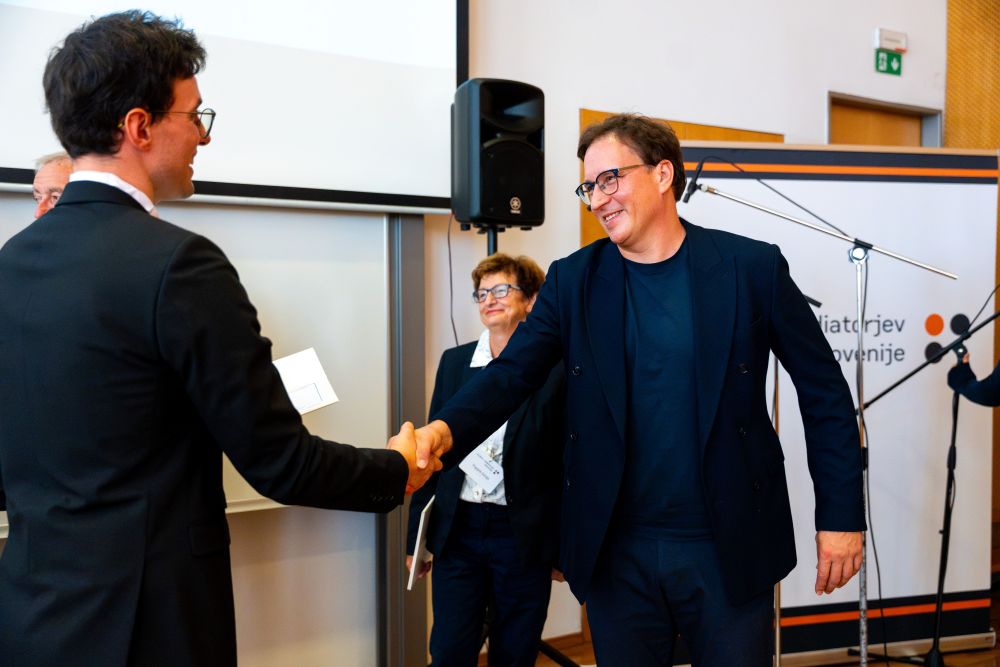
At the end of the second day, the Association presented awards recognising professional, organisational, educational and voluntary contributions. The awards were symbolic, but the gratitude was very concrete: for the knowledge, time, energy and work that individuals have devoted over the years to the development of mediation and the Association.
The twenty-year history of the Slovenian Association of Mediators is not merely a history of projects, training programmes, conferences, publications and other achievements. Above all, it is a history of people that is of all the members who have helped build this story.
The development of mediation in Slovenia is the result of the work of mediators, volunteers, trainers, judges, lawyers, academics, educators and many others who have each contributed, in their own field, to the development of a culture of peaceful dispute resolution.
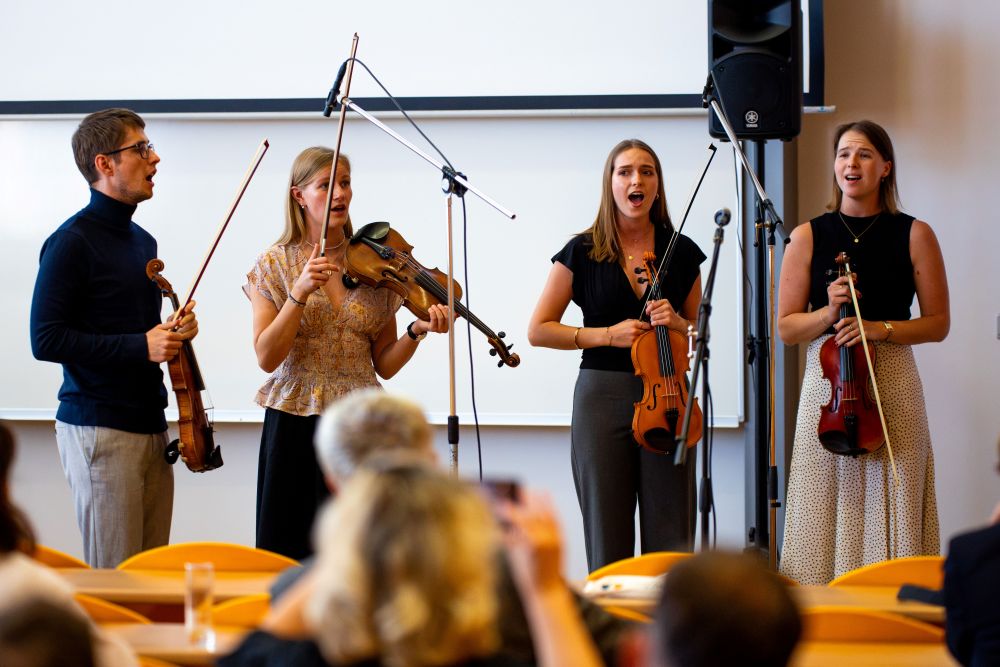
The ceremonial part of the event also featured a musical performance by Propertea, and the conference concluded with an informal gathering of participants.
Conclusion
Over the course of two days, the conference demonstrated through a wide range of professional perspectives just how broadly mediation can be understood today. The legal perspective connected it with the rule of law and effective dispute resolution. The empirical analysis of court-annexed mediation demonstrated that its effects can also be measured in terms of the duration of court proceedings and the probability of settlement. Anthropological and humanistic perspectives raised questions of power, language, dignity and justice. The discussion of democracy highlighted the importance of legitimate disagreement. Socratic dialogue drew attention to the value of examining one’s own beliefs and to the fact that agreement is not necessarily the only measure of success. Healthcare and psychological perspectives, meanwhile, demonstrated how deeply conflict is shaped by fear, emotions, identity and an individual’s experience of their own position.
A common conclusion emerging from these perspectives is that conflict should not be understood simply as a disturbance that must be removed as quickly as possible. Conflict is often an expression of genuine differences in interests, needs, values, experiences and perspectives. Constructively engaging with conflict therefore does not mean eliminating differences or always reaching consensus. Rather, it means being able to listen, understand, examine our own assumptions, recognise the other person’s perspective, and find ways in which difference can exist without necessarily developing into hostility.
In his closing remarks, Aleksander Jakobčič, President of the Slovenian Association of Mediators, emphasised that humanity has not progressed solely because it has developed new tools, technologies and knowledge. It has also progressed because people have repeatedly learned to cooperate, build communities and find ways of living together despite their differences.
Mediation cannot and should not replace law, courts, democratic institutions or individual accountability. It can, however, offer knowledge and principles whose relevance extends far beyond the formal mediation process: the ability to listen to someone with whom we disagree; to distinguish understanding from agreement; to recognise the interests and needs underlying stated demands; to examine our own assumptions; and to seek space for cooperation even when differences cannot be eliminated.
It is in this sense that we can understand the journey captured in the title of the Slovenian Association of Mediators’ anniversary conference: “from an alternative to an essential social competence.”
In a world in which conflicts are unlikely to become less frequent, the ability to manage them peacefully, responsibly and constructively is becoming an increasingly important part of our shared life.
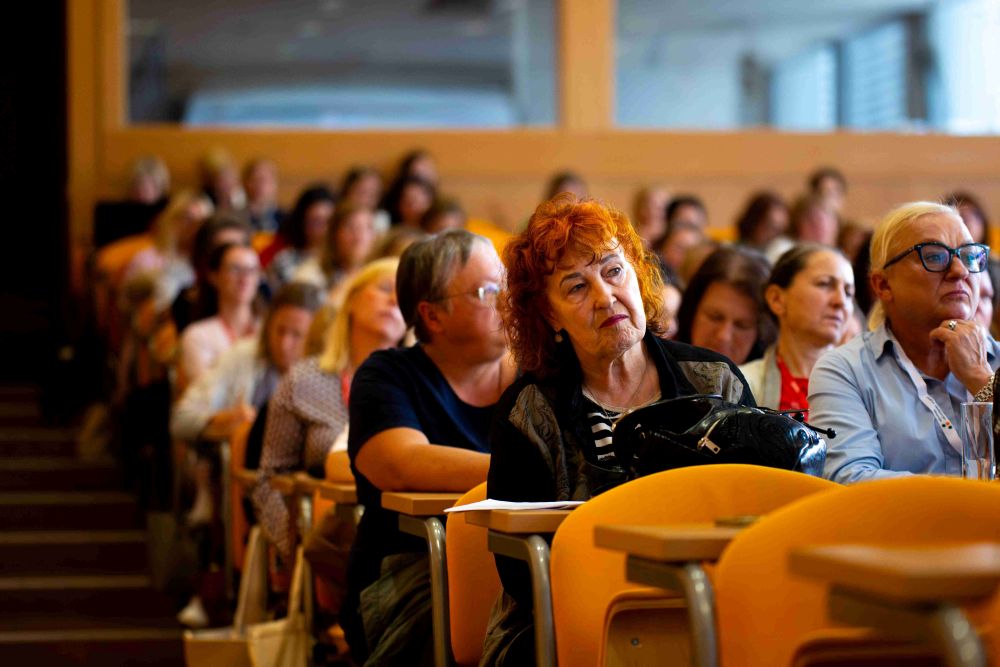
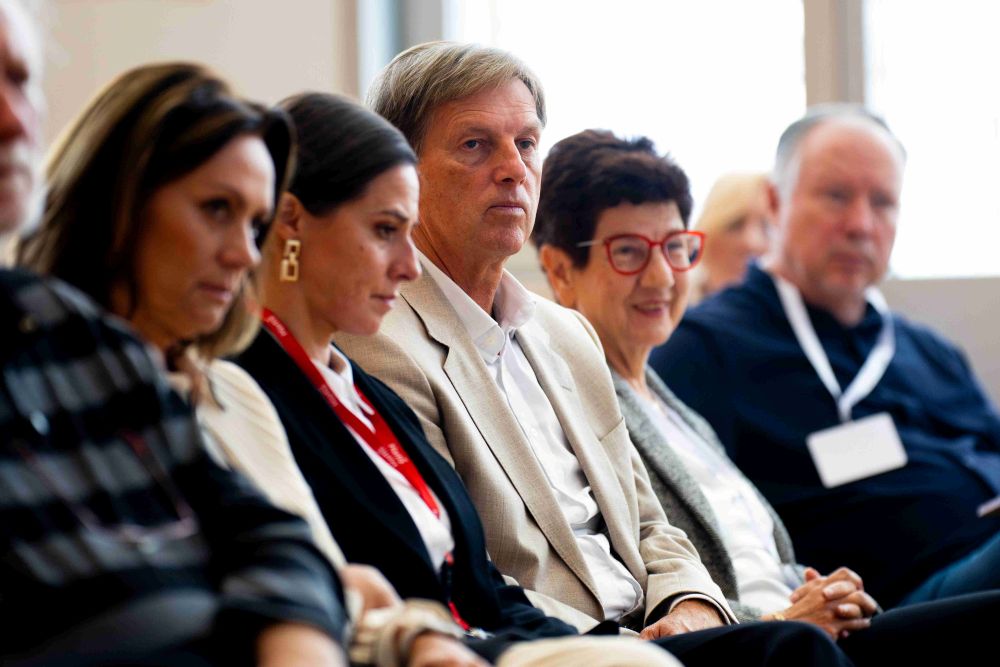
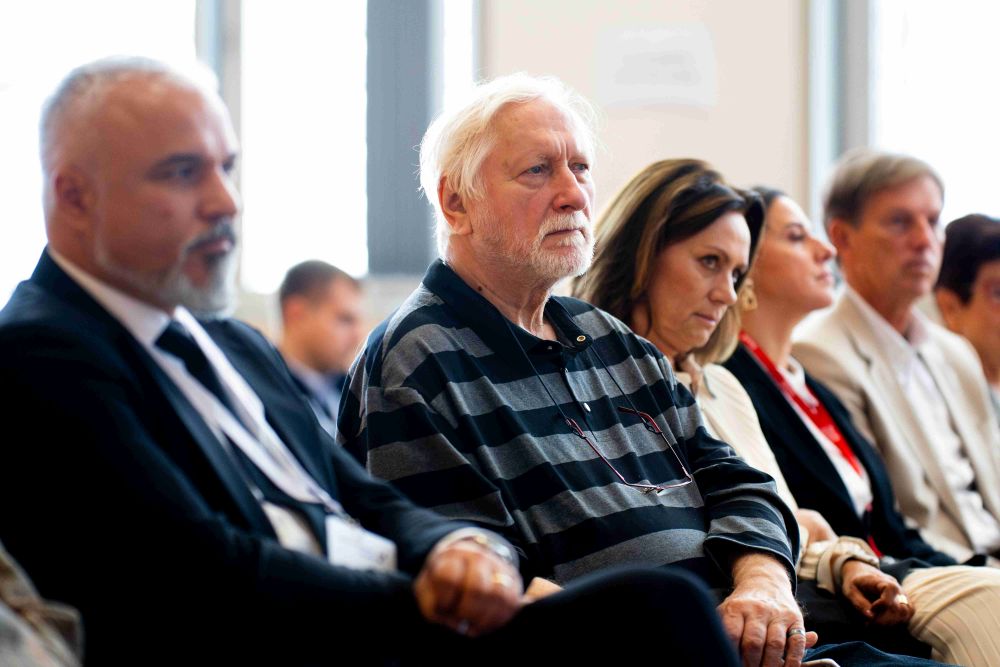
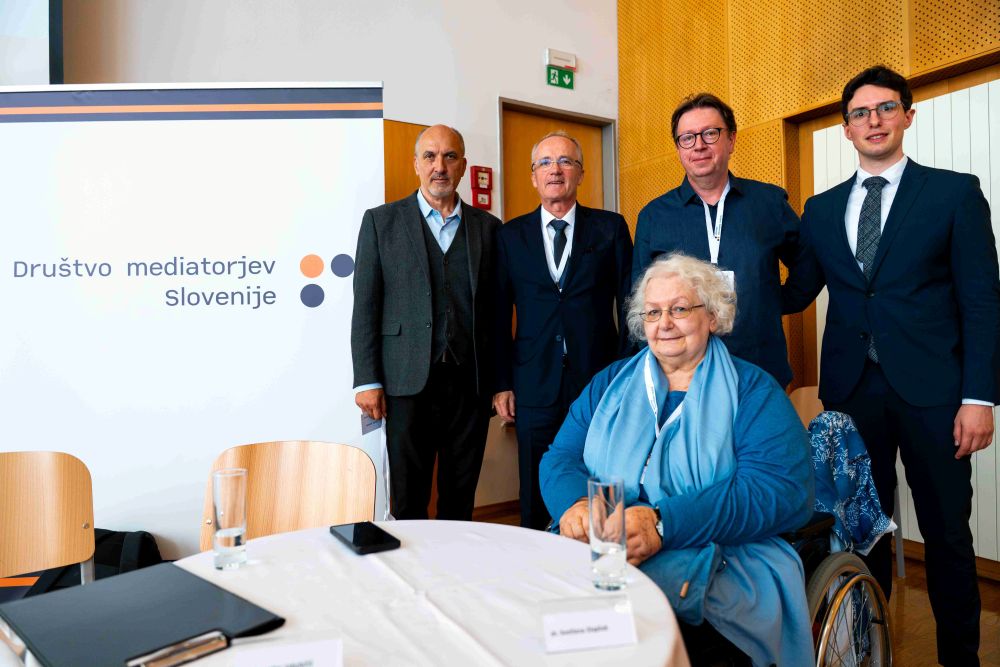
Photos from the conference

[1] Peter Grajzl, Jaka Cepec and Barbara Mörec, “Does Court-Annexed Mediation Facilitate Case Disposition? Evidence from Civil and Commercial Lawsuits”, International Review of Law & Economics, 85 (2026).